The Governed AI Engine: Orchestrating Zero-Trust Architecture to Accelerate Enterprise GenAI


Introduction
The main obstacle companies face when rushing to adopt AI isn't technological at all; it's fear—fear of receiving a huge GDPR penalty, of having a dataset leaked, or of making a million-dollar call on the basis of poor data. At V4C, we have overcome the 'Governance Paradox' by establishing a Zero-Trust architecture which facilitates rather than hinders innovation. There is no need to decide between rigorous compliance and quick data access; we provide both so that your business can scale Generative AI securely.
Overview: The Governed AI Engine
Think of the Governed AI Engine as a safe home for your data. It preps your system for AI without putting security at risk. It was designed so that the information used in your AI models is clean, well managed, and fully trackable. This represents a new way of handling data rules. Rather than slowing things down, this arrangement actually enables your business to move more quickly and allows leaders to fully trust the results of their AI.
Why Do Enterprise AI Strategies Fail? (Challenges Faced)
Modern Chief Data Officers are often involved in a high-stakes conflict, since the various business units want the immediate implementation of Generative AI while the security teams usually introduce restrictive measures in order to guard against possible data breaches.
- The Impact on Business: Traditional architectures involve a harmful compromise between speed and security; when speed is given priority, it usually leads to a "Data Swamp," that is, a pile of disorganized and unexamined data which in turn causes hallucinations in AI models.
- The Cost of Inaction: Companies are already losing a lot of money because of poor data; things become very complicated quickly if you introduce Generative AI without having the appropriate safety measures in place, since you then waste your cloud budget, face substantial fines, and lose the trust of your leadership team.
- Why Traditional Approaches Fail: Older data setups try to fix this by making dozens of copies of the same data just to hide certain information from different users. This greatly increases your storage expenses and completely breaks your ability to keep track of where the data originated from. Moreover, your AI ends up training on out-of-date information.
Solving the Governance Paradox:
We meet the governance requirements by using Databricks Unity Catalog and Delta Live Tables (DLT) to implement a Zero-Trust Medallion Architecture; rather than making physical copies of the data, we apply 'Governance-as-Code' to a single source of truth.
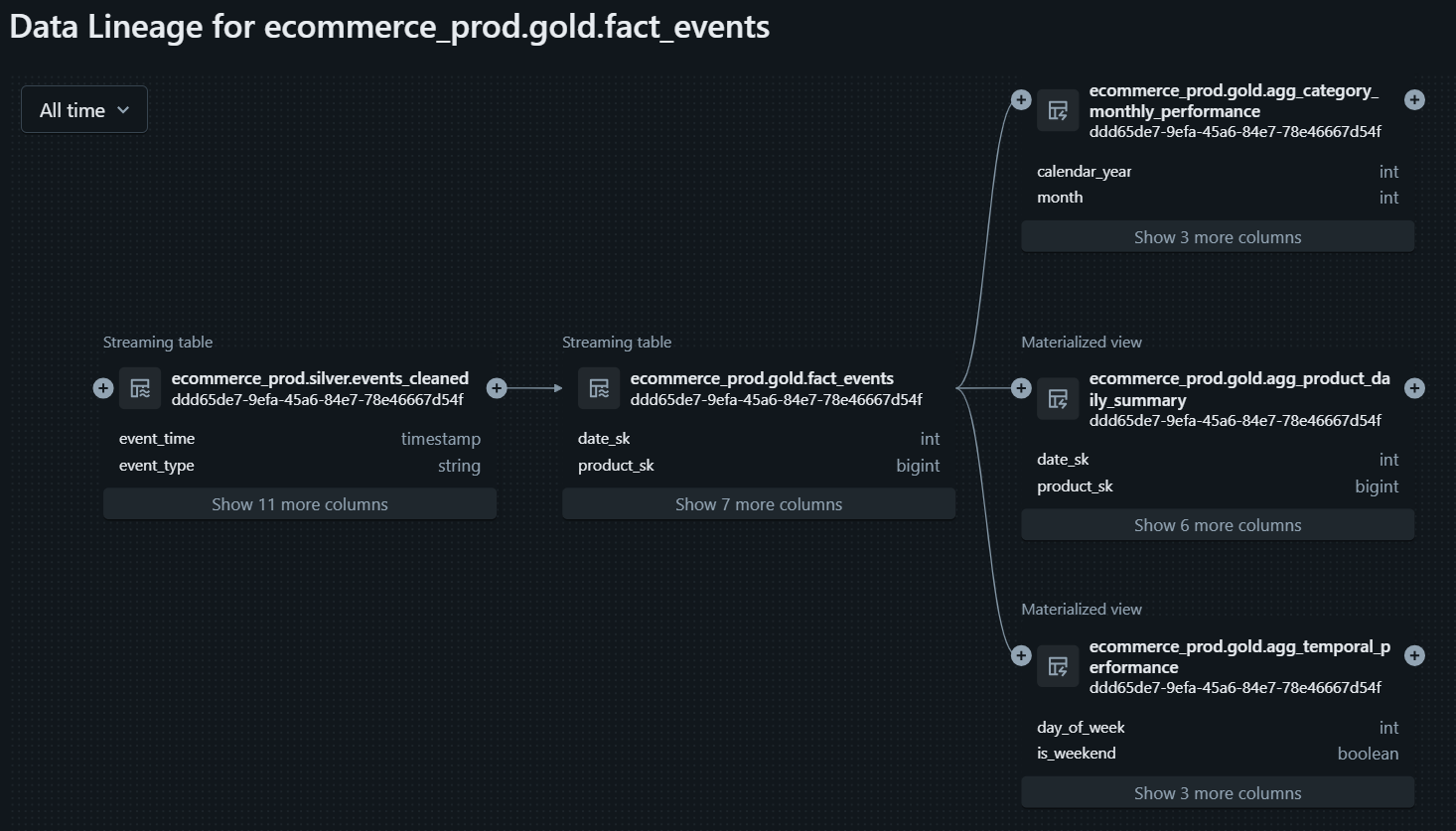
1. Immutable Lineage & Auditability Regulators need to understand the reasoning behind an AI's particular prediction, and we maintain a complete record of the entire process, tracking every data point from the final dashboard all the way back to the original source file.
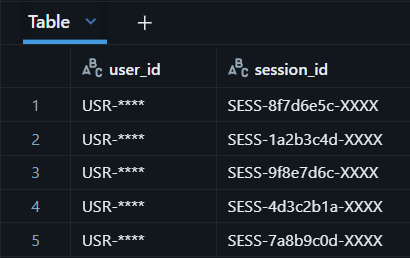
2. Identity-Centric Security (Column-Level Security) We implement Dynamic Row-Level Security (RLS) and Column Masking. In this approach, the data is able to determine who is viewing it. Rather than writing complicated and fragile application logic, we use declarative SQL functions within Unity Catalog to mask Personally Identifiable Information (PII) for users who are not authorised, while at the same time providing full access to executives who have been cleared.
We create custom Column-Level Security (CLS) rules using Databricks SQL. The functions dynamically apply masking logic to User IDs and Session IDs based on role-based access controls.
CODE:
-- Masking function for User IDs (PII Protection)
-- Logic: Members of 'platform_admins' see raw IDs; others see masked values.
CREATE OR REPLACE FUNCTION user_id_mask(user_id STRING)
RETURN CASE
  WHEN is_account_group_member('platform_admins') THEN user_id
  ELSE CONCAT(LEFT(user_id, 4), '****')
END;

-- Masking function for Session IDs (PII Protection)
-- Logic: Members of 'platform_admins' see raw IDs;
CREATE OR REPLACE FUNCTION session_id_mask(session_id STRING)
RETURN CASE
  WHEN is_account_group_member('platform_admins') THEN session_id
  ELSE CONCAT('SESS-', LEFT(session_id, 8), '-XXXX')
END;
When an unauthorized user or AI model queries the Gold table, Unity Catalog dynamically applies the mask without breaking downstream processes:
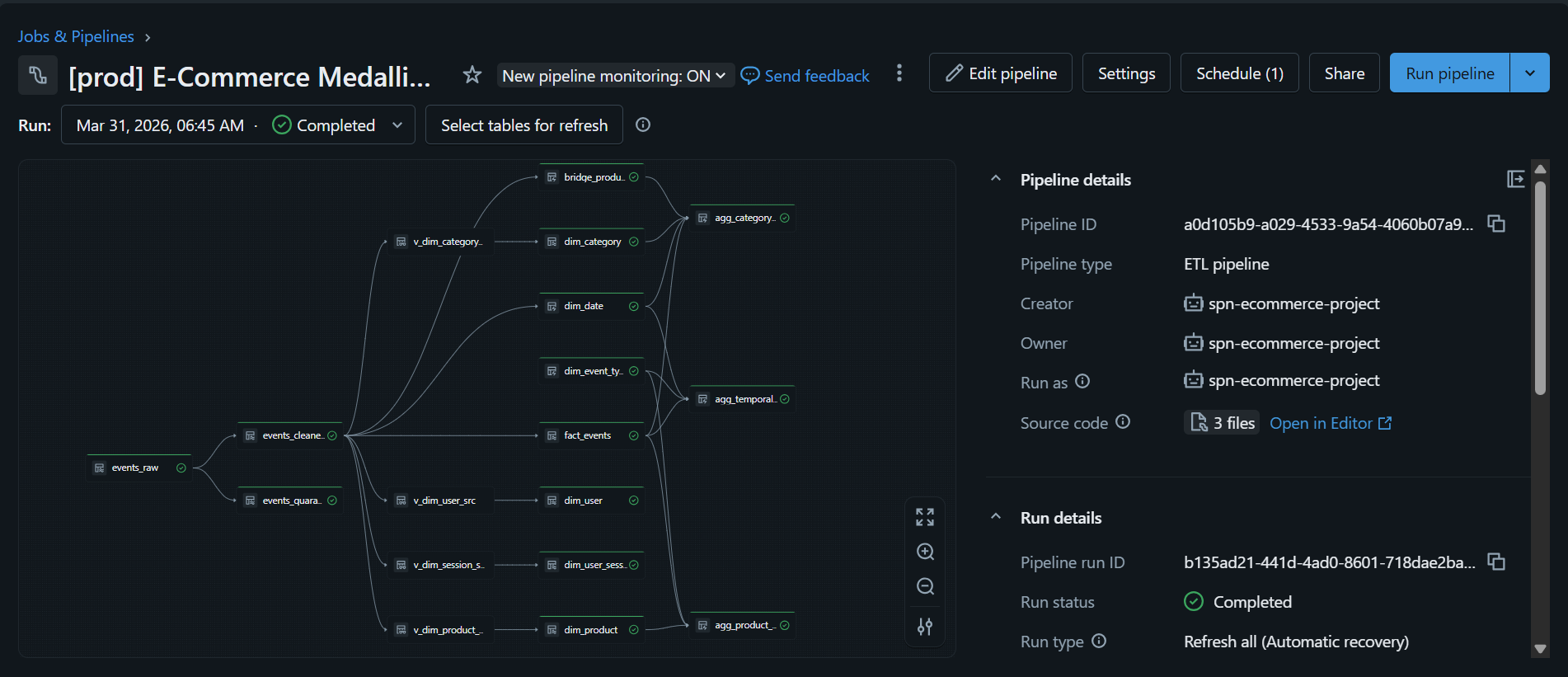
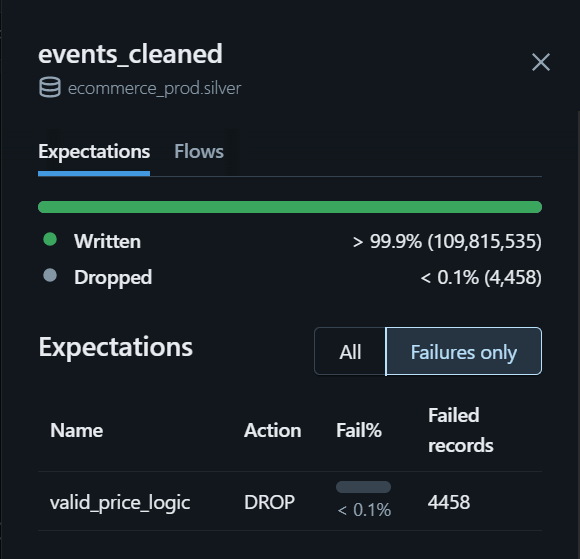
3. High-Fidelity Guardrails & Resilient Ingestion AI hallucinates when it learns from bad data. To prevent this, we use DLT Expectations to enforce strict 'Data Contracts'. Should the incoming data fail a 100% accuracy test, it is immediately placed in quarantine and your AI will only process certified, gold-standard data.
Benefits & Use Cases
When companies use the Governed AI Engine, they gain real, measurable value.
Key Advantages:
- Accelerated Time-to-Market (25%+): The engine is based on a unified Lakehouse architecture, which has proven to increase data team productivity by up to 25%, and since we have added automated data cleansing and self-healing pipelines onto this foundation, AI models and BI dashboards can now be deployed at record speed without compromising governance.
- Reduced Cloud Infrastructure Costs: The "Zero-Copy" architecture eliminates the need to maintain duplicate tables for varying permission levels, directly cutting storage overhead.
- Seamless Regulatory Compliance: Legal and security departments achieve complete certainty through immediate, transparent audit histories.
Enterprise Use Cases
The architecture that we have built goes well beyond what is normally available in reporting. By using the Governed AI Engine, you can actively safeguard high-stakes workflows in any industry as follows:
- Dynamic Data Access Control: Within a wealth management environment, the AI Copilot leverages Unity Catalog to enforce role-based access in real-time. When a junior advisor looks at a summary of a client's portfolio, the report shows only the masked SSNs and account numbers, whereas a Branch Manager who carries out the same prompt gets the complete, unmasked report. Thus, there is no need for extra application layers or for data to be duplicated, since the governance logic is located directly within the data layer.
- Proactive Compliance Guardrails: When training a Generative AI model on clinical trial data in a healthcare environment, it is essential to follow privacy regulations. By using guardrails based on Delta Live Tables (DLT), the system is able to automatically detect and isolate any patient record that is missing the necessary consent flag well before it reaches the Gold layer. Thus, your AI models will only encounter approved data, preventing compliance problems from arising without the need for manual intervention.
- Unified Pipelines for Multi-Tiered Analytics: In retail and e-commerce companies, a single secure pipeline can enable internal GenAI chatbots to carry out a variety of roles. If a regional manager is querying daily buyer statistics, they receive aggregated sales performance with the customers' personal information dynamically hidden; on the other hand, when a VP of Sales carries out the same query, they are given access to the complete, unmasked demographic list, thus providing secure reporting that is adjusted according to role without requiring the data to be split.
Prerequisites
- A modern cloud foundation (Azure ADLS Gen2, AWS S3, or GCP).
- A Premium-Tier Databricks workspace (required to unlock the advanced governance features of Unity Catalog).
- A centralized metastore configured in your cloud region.
Common Adoption Challenges
Enforcing strict Unity Catalog governance necessitates the use of a centralised metastore, a situation which can be difficult for companies that have highly fragmented and outdated workspaces. Furthermore, adopting a rigorous Medallion architecture involves a change in culture, highlighting the importance of using certified data layers rather than the risky practice of querying raw, unvalidated datasets.
How V4C.ai can help
V4C bridges the gap between raw cloud infrastructure and a production-ready AI strategy by providing an automated, "Governance-as-Code" deployment framework. We speed up your migration to Unity Catalog by utilizing our own Infrastructure-as-Code (IaC) templates and Declarative Automation Bundles (DABs), which simplify the intricate process of securing network configurations, creating metastore repositories, and building self-healing DLT pipelines.
Alongside handling the technical side of things, we also provide the change management support needed to move your organization from inefficient legacy processes to a unified Medallion architecture. This ensures your engineers are no longer bogged down by infrastructure and can instead focus on producing high-quality, governed data for GenAI's next wave.
Conclusion & Future Roadmap
AI without governance isn't a strategy; it's a liability. Orchestrating a Zero-Trust foundation turns your data from a compliance risk into your sharpest AI asset. As enterprise AI expands to include multi-agent systems and cross-cloud setups, it is the unified Lakehouse that separates the market leaders from the rest.
Is your current data architecture limiting your AI potential? Partner with V4C to build a resilient, Zero-Trust Lakehouse designed for the future of enterprise intelligence.
References
[1] The Total Economic Impact™ Of The Databricks Platform.
[2] Data governance with Databricks
More blog posts