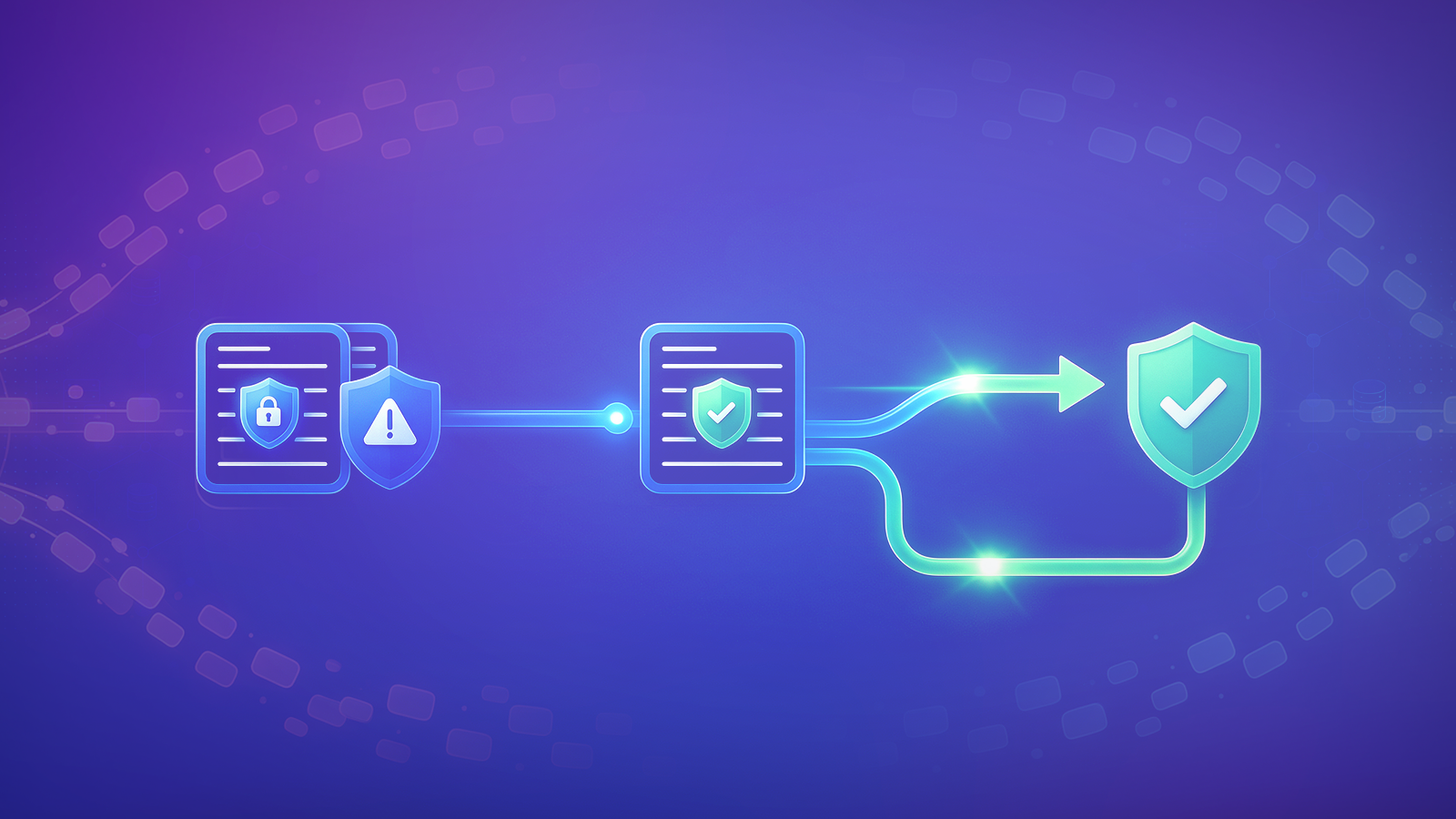
Building Production-Ready Databricks Pipelines
Lakeflow, CI/CD, and Pytest Testing

.png)
Author : Naman Kandhari
Problem Statement:
A question every data engineering team faces is: how can Databricks pipelines be shipped quickly without making each deployment a source of constant anxiety?
You will already know the trouble if you've had experience with a huge, monolithic notebook. It's not really feasible for anyone to go through every line before it is sent out. The most alarming aspect isn't the major changes; it's the small 'harmless' adjustment that silently causes something to break, which is three steps removed from the actual change you made.
Most teams are left with two unsatisfactory choices. If they take a cautious approach, they end up lagging behind on updates because they lack a proper testing or release process to support them. Alternatively, they can move quickly and accept that bugs will eventually make it into production. In both cases, the outcome is unsatisfactory.
Solution: The Production-Ready Pipeline
In 2026, three things arrived in Databricks which, when combined, actually close this gap: native Pytest support, Lakeflow Declarative Pipelines, and Databricks Asset Bundles (DABs) for CI/CD. While none of these solutions by itself is a silver bullet, together they provide something that is very much like a genuine software engineering workflow when applied to data pipelines
1. Lakeflow: The Modern Pipeline Framework
Lakeflow is the declarative pipeline framework offered by Databricks, and the change in thinking that it requires is straightforward: rather than specifying the 'how', you should describe the 'what'. You indicate to it the structure of the data that you want, and Databricks then determines the incremental processing, the order in which the tasks are executed, and how failure recovery is to be carried out
New Resiliency & Governance Features:
- Zero-Downtime Schema Evolution: it is possible to perform schema evolution without downtime; column types can be widened (for example, from INT to LONG) without restarting the pipeline.
- Effective Data Overwrites (Type 1 AUTO CDC): this is essentially a fast “just overwrite it” kind of data capture, with the result that you obtain the current values without having to carry along a huge history log.
- Instead of simply rejecting requests for concurrent updates, Databricks now queues them, thereby quietly avoiding a type of pipeline failure that nobody likes to debug.
2. Unit and Integration Testing with Pytest
As of February 2026, Pytest no longer needs to be added from the outside; it is now part of the Databricks workspace itself, with features such as the results window, run buttons, and a dedicated Tests sidebar. You will no longer need to leave the platform in order to run a test suite. In truth, it's not the tooling that's the real advantage here. The real advantage comes from moving your logic out of notebooks and into plain Python modules, since a function in a .py file is testable, but a cell hidden in a 40-cell notebook is not.
# transforms/sales.py

def fix_price(df):
    return df.withColumn('price', F.when(F.col('price') <= 0, F.lit(1.0))
                          .otherwise(F.col('price')))

# tests/test_sales.py
def test_fix_price(spark):
    # Fixture includes valid (positive), zero, and negative prices
    df = spark.createDataFrame([
        (1, 5.0),   # Valid positive price
        (2, 10.0),  # Valid positive price
        (3, 0.0),   # Zero price (invalid)
        (4, -3.5)   # Negative price (invalid)
    ], ['order_id', 'price'])

    result_df = fix_price(df)
    # 1. Assert that no non-positive prices remain
    assert result_df.filter('price <= 0').count() == 0

    # 2. Assert exact transformed values (0.0 and -3.5 should become 1.0)
    actual_prices = [row.price for row in result_df.sort('order_id').collect()]
    assert actual_prices == [5.0, 10.0, 1.0, 1.0]
3. CI/CD with Declarative Automation Bundles (DABs)
Currently, DABs are the standard method for managing CI/CD on Databricks as a single YAML file defines your pipelines, clusters, and permissions and is stored in Git before being applied to each environment.
# databricks.yml

targets:
  staging:
    workspace:
      host: https://staging.azuredatabricks.net

  prod:
    workspace:
      host: https://prod.azuredatabricks.net
- When a feature branch is pushed, GitHub Actions automatically runs unit tests.
- PR merge to main → Integration tests run → DABs automatically deploy to staging
- A manual approval gate is required before every production deployment.
- Rollback: undo a Git commit
4. Data Quality with Lakeflow Expectations
Data quality rules get enforced directly in the pipeline, checked on every run:
@dp.expect('valid_price', 'price > 0')          # Logs violation, pipeline continues
@dp.expect_or_drop('valid_price', 'price > 0')  # Drops bad rows silently
@dp.expect_or_fail('valid_price', 'price > 0')  # Halts pipeline on first violation
5. Why This Works
- Testable: logic is contained in simple functions, allowing you to test it individually, just as you would test any other section of software.
- No friction: the Pytest environment closely mirrors the production environment; there isn't a separate 'test world' to keep in sync.
- Consistent: each environment uses the exact same YAML file, which means that the problem of it working on staging but failing in production largely goes away.
- Layered quality: while tests pick up bugs in your code, Lakeflow Expectations detect bugs in your data at runtime, which is a completely different issue
6. Future Outlook: Steering Towards Zerops
Lakeflow, DABs, and Pytest form the basis, but they aren't the ultimate objective. Databricks is aiming at something more extensive: ZeroOps, pulling infrastructure and maintenance out of the picture entirely so engineers can focus purely on data logic. Three things are driving it:
- Zero-maintenance compute (Serverless Lakeflow): pipelines run directly on serverless infrastructure, so no one needs to worry about cluster sizing, config drift, or init scripts anymore.
- Agentic operations (Genie ZeroOps): AI agents handle monitoring and troubleshooting by assessing the extent of damage caused by a failure and proposing a solution, rather than having a person sift through the Spark UI logs at 2am.
- Self-healing and autonomous tuning: Lakeflow Expectations, Liquid Clustering, and Predictive Optimization work together in the background to quietly correct minor data issues, identify rogue schemas, and adjust the table layout, all without paging a database administrator.
The key difference is that DevOps automates infrastructure management through code; DABs are a clear example of this. ZeroOps takes it a step further by attempting to eliminate infrastructure management entirely. The data engineer is then only required to write and test the logic; the platform handles provisioning, tuning, execution, and healing automatically.
7. Quick Fixes
- Modularize now: give up on writing huge monolithic notebooks and move your transformation logic into Python modules so that it can actually be unit-tested.
- Keep tests off production storage: use dummy data, small, manually coded DataFrames, and separate test schemas in order to keep your test processes quick and safe.
- Manage environments through DABs: a single Git-managed YAML file covering clusters, schedules, and permissions beats manual configuration drift every time.
8. How v4c.ai Can Help
v4c.ai is a pure-play Databricks services partner with 750+ certifications, 500+ practitioners, and 200+ enterprise clients across Financial Services, Retail, Manufacturing, and Healthcare. We assist teams in overcoming the issues associated with monolithic notebooks by designing production-ready architectures based on DABs for Git-driven CI/CD, Lakeflow for declarative execution, and Pytest for automated unit testing. Lakeflow Expectations ensure data quality in real time, while Lakeflow handles parallelism, incremental processing, and schema evolution. After the initial build, we continue to provide support as organizations transition to scalable, serverless pipelines, including architecture reviews, Unity Catalog governance, and direct technical assistance.
9. References
- Databricks Documentation: Introduction to Declarative Automation Bundles
- Databricks Documentation: Manage Data Quality with Delta Live Tables/Lakeflow Expectations
- Databricks Documentation: Run Unit Tests with Pytest in Databricks Workspace